
Europe’s most iconic destinations—Paris, Rome, Barcelona—draw millions of visitors annually, often leaving lesser-known cities overlooked. These hidden gems offer authentic experiences, fewer crowds, and unique cultural treasures worth exploring. Here are ten exceptional destinations that deserve a place on your travel itinerary.
1. Sighișoara, Romania
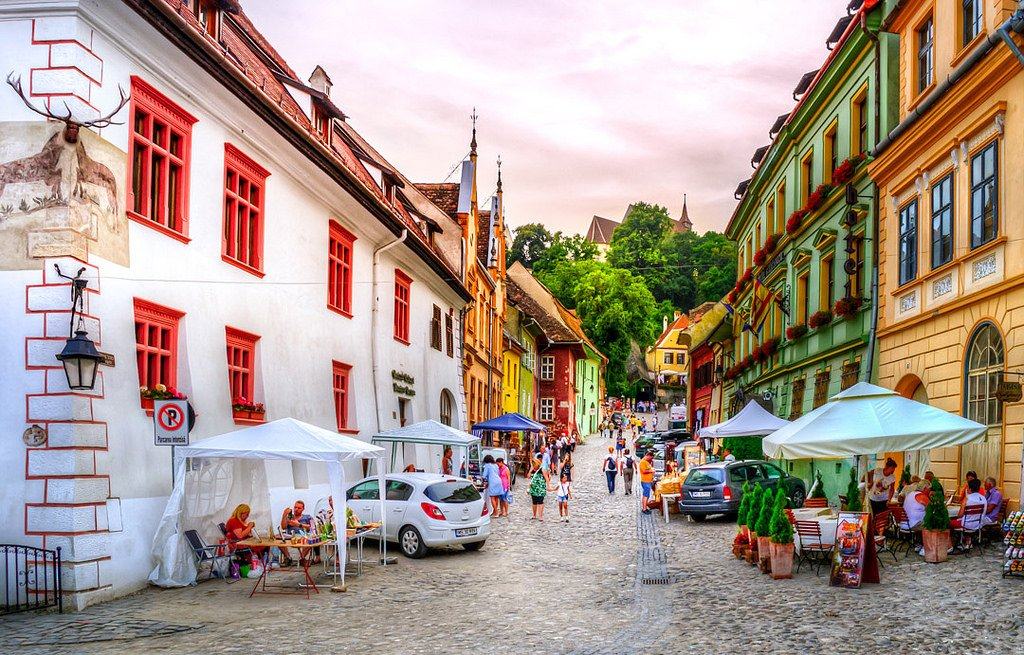
Nestled in Transylvania, Sighișoara stands as Europe’s only inhabited medieval citadel, with a UNESCO World Heritage designation reflecting its exceptional preservation. The town features colorful pastel-painted houses lining steep cobblestone streets, creating a fairy-tale atmosphere at every corner. The journey up the narrow wooden steps through the town reveals medieval charm, while the Church on the Hill rewards climbers with sweeping panoramic views and houses the only ancient crypt in Transylvania. For maximum atmosphere, visit during the late July Sighișoara Medieval Festival, when the streets transform with historical reenactors, knights, and craftspeople.
2. Berat, Albania
Known as the “City of a Thousand Windows,” Berat showcases one of the best-preserved Ottoman cityscapes in the Balkans. The town cascades down a hillside with white-washed houses featuring distinctive windows that seem to stare out across the Osum River. Berat Castle, uniquely still inhabited by residents, offers commanding views and contains houses, churches, mosques, and restaurants within its fortified walls. The atmospheric Mangalem and Gorica neighborhoods feature winding cobblestone streets, hidden gardens, and traditional restaurants, while exploring the city illuminated at night reveals an entirely different magical character.
3. Annecy, France
Dubbed the “Venice of the Alps” and the “Pearl of the French Alps,” this picturesque Haute-Savoie town sits at the northern tip of a stunning turquoise lake surrounded by snow-capped mountains. The beautifully preserved medieval old town features pastel-colored buildings, elegant stone footbridges, and canals creating enchanting vistas at every turn. Beyond the charming center, Lake Annecy offers water sports and scenic lakeside villages, while the surrounding Alpine peaks provide excellent hiking opportunities for all fitness levels.
4. Brno, Czech Republic
As the Czech Republic’s second-largest city, Brno rivals Prague in cultural richness while maintaining a refreshingly local, unpretentious atmosphere. The city captivates visitors with unique attractions including the naturally mummified Capuchin friars in the 18th-century Capuchin Crypt and the fascinating medieval cellar labyrinth beneath the Vegetable Market. Impressive landmarks like Špilberk Castle offer commanding city views, while the vibrant student population ensures excellent cafés, restaurants, and nightlife. The surrounding South Moravian wine region provides opportunities for vineyard tours and tastings.
5. Graz, Austria
Austria’s second-largest city and UNESCO World Heritage Site remains surprisingly underrated compared to Vienna and Salzburg. The city blends historic architecture with contemporary culture, earning its designation as a “City of Design.” The striking Kunsthaus (lovingly called “the Friendly Alien” by locals) contrasts with the storybook charm of the medieval old town and the Landhaus Courtyard. Schlossberg Hill, accessible via four different methods including a 558-foot indoor slide, provides breathtaking panoramic views. The culinary scene is exceptional, cementing Graz’s reputation as Austria’s gastronomic capital.
6. Olomouc, Czech Republic
Once the capital of Moravia, Olomouc offers Prague’s historical depth with a fraction of the crowds. The UNESCO-listed Holy Trinity Column on Horní Náměstí Square stands as one of Central Europe’s finest Baroque monuments. The astronomical clock, larger than Prague’s famous version, puts on an even more impressive show. Rick Steves considers Olomouc the Czech Republic’s second-most important city, yet it remains largely unknown to international travelers. The compact, walkable old town features pastel townhouses, charming courtyards, and an exceptional café scene enhanced by the presence of Palacký University’s students.
7. Bolzano, Italy
Perched in the Italian Alps as South Tyrol’s capital, Bolzano masterfully blends Italian and Austrian cultures with stunning natural surroundings. The well-preserved medieval old town, with its characteristic arcaded streets, medieval buildings, and Gothic cathedral, creates an enchanting atmosphere. The South Tyrol Museum of Archaeology houses the famous glacier mummy Ötzi, a 5,300-year-old archaeological marvel offering insights into prehistoric Alpine life. Wine enthusiasts should explore the surrounding vineyards producing renowned regional wines, while hikers and outdoor enthusiasts find endless mountain trails and activities.
8. Kotor, Montenegro
Often called Europe’s southernmost fjord, the Bay of Kotor and its walled medieval town create one of the Mediterranean’s most breathtaking landscapes. Kotor’s fortified old town, surrounded by imposing limestone cliffs rising nearly 1,900 meters, features narrow Venetian-influenced streets, historic churches, and atmospheric coastal charm. The UNESCO World Heritage site draws fewer crowds than Croatian coastal competitors, offering authentic Mediterranean culture with dramatic mountain backdrops and opportunities for boat trips exploring the bay’s four interconnected basins.
9. Rila Monastery, Bulgaria
Bulgaria’s most significant Orthodox cultural landmark, this 10th-century monastery complex stands as a UNESCO World Heritage Site deep in the Rila Mountains. The impressive compound features 65-foot defensive walls, stunning frescoes, intricate wood carvings, and the remarkable 14th-century Hrelyo Tower. Just 90 minutes from Sofia, Rila Monastery remains remarkably undercrowded despite its cultural importance, making it ideal for those seeking spiritual and historical immersion in a serene mountain setting.
10. Brașov, Romania
Nestled in the Carpathian Mountains, Brașov combines medieval architecture with a vibrant cultural scene in one of Transylvania’s most atmospheric cities. The impressive Gothic Black Church dominates the main square, while narrow cobblestone streets lead to hidden courtyards and traditional restaurants. Its location provides convenient access to nearby medieval villages, fortified churches, and the stunning mountain landscapes that define this region’s appeal. The city offers authentic Romanian culture without the tourist saturation of more famous destinations.
Travel Tips for These Destinations: These cities offer exceptional value, fewer crowds than mainstream European destinations, and authentic cultural experiences. Spring (April-May) and fall (September-October) provide ideal weather and lighter crowds. Many are easily accessible by train, and local transportation remains affordable and efficient. Consider combining several destinations in a single region—Brno, Olomouc, and Brașov work well as a Central European circuit, while Berat and Kotor connect naturally along the Adriatic.